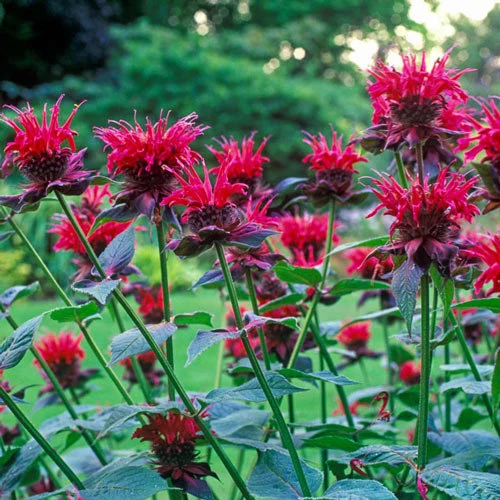
The Raspberry Wine Bee Balm (Monarda didyma ‘Raspberry Wine’) is a vibrant, hardy perennial known for its showy raspberry-red blooms, aromatic foliage, and its strong attraction to pollinators—especially bees, butterflies, and hummingbirds. It’s a popular choice for cottage gardens, wildflower meadows, and butterfly gardens. Here’s a full care guide to help you grow a healthy and stunning Raspberry Wine Bee Balm:
Raspberry Wine Bee Balm Care Guide
Light Requirements
- Full Sun (6+ hrs/day) is best for vigorous growth and abundant blooming.
- Part Shade is tolerated, but blooming may be reduced, and the plant may get leggy.
Soil
- Prefers moist, well-draining soil enriched with organic matter.
- pH: Neutral to slightly acidic (6.0–7.0).
- Avoid heavy clay or very dry soil unless amended.
Watering
- Likes consistently moist soil, especially during dry spells.
- Water deeply but allow the top inch of soil to dry slightly between waterings.
- Add mulch to retain moisture and keep roots cool.
Bloom Time
- Midsummer to early fall (July–September).
- Raspberry-colored, shaggy flowers with a unique, tubular shape perfect for pollinators.
Plant Size & Spacing
- Height: 2.5–4 feet tall
- Spread: 2–3 feet wide
- Spacing: 18–24 inches apart to ensure good air flow and prevent mildew.
Fertilizing
- Apply a balanced slow-release fertilizer in spring.
- Alternatively, use compost or well-rotted manure as a soil amendment.
Pruning & Maintenance
- Deadhead spent flowers to encourage more blooms.
- Cut back stems to the ground in late fall or early spring.
- May benefit from dividing every 2–3 years in spring or fall to prevent overcrowding.
Pests & Diseases
- Main concern: Powdery mildew, especially in humid or crowded conditions.
- Prevention: Provide good air circulation, don’t overhead water, and space plants properly.
- Generally deer-resistant.
- May occasionally attract aphids—rinse off with water or use insecticidal soap if needed.
Hardiness
- USDA Zones 4–9.
- Cold-hardy and comes back reliably each year in the right zone.
Pollinator Magnet
- Attracts:
- Bees
- Butterflies
- Hummingbirds
- Perfect for pollinator gardens and native plant landscapes.
Companion Plants
Pair Raspberry Wine Bee Balm with:
- Coneflowers (Echinacea) – complementary bloom time and pollinator power
- Black-eyed Susans (Rudbeckia)
- Yarrow, Salvia, or Veronica
- Tall grasses for contrast and structure
Propagation
- By Division: Every few years in spring or fall. Dig up the plant, divide clumps, and replant.
- From Cuttings: Take stem cuttings in spring or early summer.
- From Seed: Can be grown from seed, but named cultivars like Raspberry Wine may not come true.
Raspberry Wine Bee Balm is a stunner that not only adds rich color to your garden but also supports pollinators in a big way. Give it space, keep it moist, and enjoy a garden buzzing with life and color!