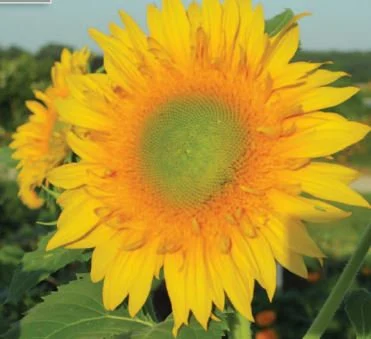
Starburst Greenburst sunflowers are a unique and eye-catching variety, known for their bold, lime-green central blooms surrounded by frilled, golden-yellow petals. They’re part of the pollen-free Starburst series, making them especially desirable for cut flower arrangements due to their clean appearance and long vase life.
Quick Facts
- Type: Annual
- Height: 5–7 feet tall
- Bloom Size: 4–6 inches
- Days to Maturity: 60–75 days
- Sun Requirements: Full sun (6+ hours daily)
- Soil Preference: Well-draining, moderately rich soil
- Pollinator Friendly: Yes (though pollen-free, still attractive to bees)
Seed Starting Instructions
When to Sow
- Outdoors: Sow directly after the last spring frost once soil has warmed to 60°F (16°C) or higher.
- Indoors: Start 2–3 weeks before your last expected frost date in biodegradable pots (sunflowers dislike transplant shock).
How to Sow
- Depth: 1 inch deep
- Spacing: 6–12 inches apart depending on the desired fullness
- Row Spacing: 18–24 inches if growing in rows
Growing Conditions
Light
- Full sun is essential for strong stems and abundant blooms.
- Choose a site with all-day sun if possible.
Soil
- Prefers loose, well-draining soil enriched with compost.
- Avoid overly rich soil or over-fertilizing, which can lead to more foliage and fewer blooms.
Water
- Keep soil evenly moist during germination.
- Once established, water deeply but infrequently to encourage strong root growth.
- Do not let soil dry out completely during peak summer.
Fertilization
- Optional if planted in decent soil.
- A light side-dressing of balanced fertilizer (10-10-10) once the plants are about a foot tall can promote healthy growth.
Maintenance
- Thin seedlings if crowded to ensure good airflow and prevent fungal issues.
- Stake tall plants if grown in windy areas to prevent bending or breaking.
- Deadhead spent flowers if you want prolonged bloom or remove mature heads to collect seeds.
Pests and Problems
- Aphids and beetles may appear; treat with insecticidal soap or neem oil if infestations are severe.
- Birds and squirrels may nibble young seedlings or seed heads—netting or garden fabric can help protect early stages.
- Fungal issues such as powdery mildew are rare in full sun and with good spacing.
Harvesting for Cut Flowers
- Cut blooms in the early morning before the heat of the day.
- Choose flowers that are just starting to open for longest vase life.
- Place immediately in cool water and condition overnight before arranging.
Saving Seeds
- Since Greenburst is often a hybrid, saved seeds may not come true to type.
- If you still want to try, wait until the back of the flower head turns brown and dry.
- Remove seeds by rubbing the head with your hand and allow them to fully dry before storing.
Ideal Uses
- Ornamental borders
- Cut flower gardens
- Pollinator and wildlife gardens
- Summer flower beds