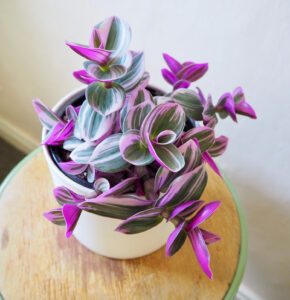
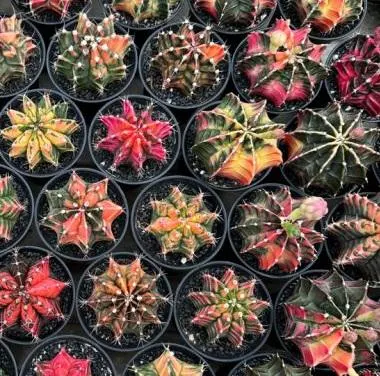
The Tye-Dye Cactus (scientifically known as Mammillaria elongata ‘Tye-Dye’) is a stunning variety of the popular Ladyfinger Cactus, known for its vibrant, colorful spines that create a tie-dye effect. This cactus is a popular choice among collectors and gardeners for its unique appearance and relatively easy care requirements. Here’s a care guide to help you grow and maintain your Tye-Dye Cactus:
1. Light Requirements
- Full Sun: thrives in bright, direct sunlight. Place it in a spot where it can receive at least 6 hours of direct sunlight daily.
- Indoors: If growing indoors, place your cactus near a south-facing window or another area that gets plenty of sunlight. If light is insufficient, consider supplementing with a grow light.
- Too much shade can cause the cactus to become weak and leggy, and it may not produce its vibrant spines.
2. Watering
- Water sparingly: Like most cacti, it is highly drought-tolerant. It prefers dry conditions and does not require frequent watering.
- Water once the soil is dry: Check the soil with your finger – when the top inch feels dry, it’s time to water. Be sure to avoid over-watering, as this can lead to root rot.
- During winter, reduce watering to once every 3-4 weeks, as the cactus enters a dormant phase.
3. Soil
- Well-draining soil is essential. Use a cactus or succulent mix or create your own by mixing regular potting soil with sand or perlite to improve drainage.
- The soil should be sandy and gritty to prevent water retention around the roots.
4. Potting and Containers
- Choose a pot with drainage holes to allow excess water to escape and prevent water from sitting at the bottom.
- Terracotta pots are ideal, as they allow for good airflow and help the soil dry out faster.
- Avoid using pots that are too large for the cactus, as this can lead to over-watering. A pot that’s slightly larger than the root ball is ideal.
5. Temperature and Humidity
- Warm temperatures: thrives in warm temperatures, typically between 70°F and 100°F (21°C to 38°C) during the growing season.
- Cooler temperatures: In winter, the cactus can tolerate slightly cooler temperatures but should not be exposed to frost or freezing conditions.
- Low humidity: Like most cacti, this plant prefers dry, arid conditions. Avoid placing it in areas with high humidity, such as bathrooms.
6. Fertilizing
- Light fertilization is enough. Use a diluted, balanced cactus fertilizer or a diluted liquid houseplant fertilizer once a month during the growing season (spring and summer).
- Avoid fertilizing during the winter when the plant is dormant. Over-fertilizing can harm the cactus and cause excessive growth at the expense of its spines.
7. Pruning
- Pruning is not necessary, but you can remove any dead or damaged sections using sterilized pruning shears or scissors.
- Be cautious when handling the cactus, as the spines are sharp and can be painful. Consider wearing gloves or using tongs to protect your hands.
8. Repotting
- Repotting is only needed when the cactus has outgrown its pot, which is typically every 2-3 years. If the plant becomes root-bound or if the soil has broken down, it’s time to repot.
- When repotting, gently remove the cactus from its old pot, check the roots for rot or damage, and place it into a slightly larger pot with fresh cactus mix.
9. Pests and Problems
- Common pests: is generally resistant to pests, but it can still be affected by mealybugs, aphids, or spider mites. If you spot any pests, remove them with a cotton swab dipped in rubbing alcohol or a gentle insecticidal soap.
- Root rot: Over-watering is the leading cause of root rot in cacti. Ensure that the pot has proper drainage and that the soil dries out between waterings.
- Sunburn: While it enjoys full sun, it can be prone to sunburn if suddenly exposed to intense, direct sunlight after being in a shadier location. Gradually acclimate the plant to higher light conditions.
10. Flowering
- Tye-Dye Cactus can produce small, colorful flowers during the warmer months. The flowers are typically yellow or orange, but blooming is not guaranteed.
- To encourage flowering, make sure the cactus gets enough sunlight, and avoid over-watering, as this can stress the plant.
11. Propagation
- From offsets: The Tye-Dye Cactus can be propagated by removing offsets (small pups that grow at the base of the plant) and allowing them to callous over for a few days before planting them in well-draining soil.
- From seeds: If you’re starting from seed, use a cactus mix and keep the seeds lightly moist. It may take time for the seeds to germinate, and patience is key.
- Avoid rooting in water, as cacti roots are adapted to dry conditions.
12. Winter Care
- During the colder months, the cactus will enter dormancy. This means it won’t require much water, and its growth will slow down.
- Reduce watering during winter and keep the plant in a warm, sunny location. If you’re growing it indoors, make sure it’s in a spot that stays above freezing.
Summary of Key Care Tips:
- Light: Full sun for at least 6 hours a day.
- Water: Water when the soil is dry; avoid over-watering.
- Soil: Use well-draining cactus or succulent mix.
- Temperature: Prefers warm temperatures; avoid frost.
- Fertilizing: Light fertilizing in the growing season.
- Pests: Check for mealybugs or aphids, and remove as needed.
- Repotting: Repot every 2-3 years or when it becomes root-bound.
By following these guidelines, your Tye-Dye Cactus will thrive and add a unique, colorful touch to your collection!