
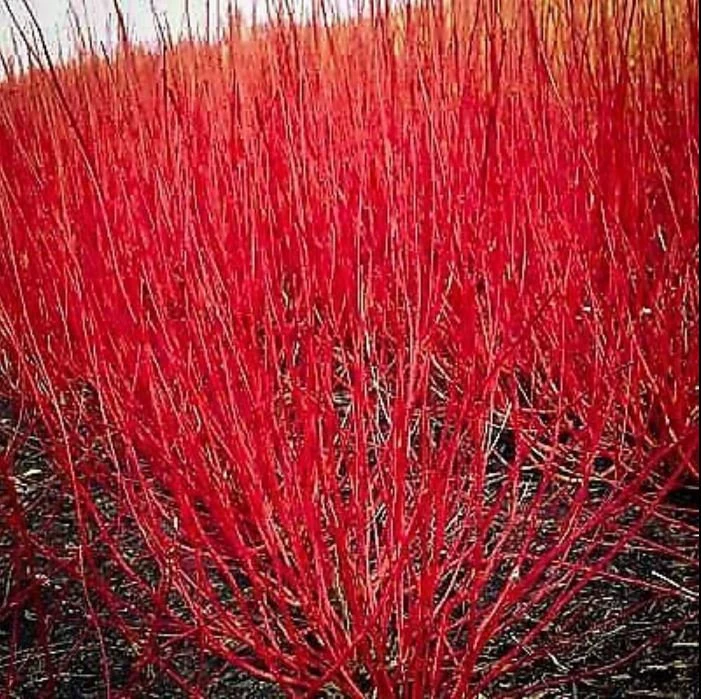
The Red Twig Dogwood (Cornus sericea), also known as Redosier Dogwood, is a versatile deciduous shrub that is widely appreciated for its striking red stems, which provide year-round interest in the garden. Native to North America, this plant is commonly found in wetland areas but has become a popular landscape choice due to its hardiness, low-maintenance care, and colorful aesthetic.
The Red Twig Dogwood has a variety of uses in the landscape, from creating beautiful hedges or borders to being used as a specimen plant in shrub gardens. Its ability to tolerate a range of soil types, exposure to both sun and shade, and its dramatic winter stems make it a favorite for both beginners and seasoned gardeners alike.
1. Overview of Red Twig Dogwood
Red Twig Dogwood is a fast-growing, multi-stemmed shrub that typically reaches 6 to 9 feet (1.8 to 2.7 meters) in height, though it can grow taller in ideal conditions. The shrub features opposite, broad oval leaves that are dark green in the summer and turn reddish-purple or yellow in the fall. Its most striking feature, however, is its red to orange stems that develop in late fall and remain vibrant through winter.
In spring, Red Twig Dogwood produces small clusters of white or cream-colored flowers, which give way to bluish-white berries in late summer. These berries attract wildlife such as birds, making the shrub not only visually appealing but also ecologically valuable.
2. Planting Red Twig Dogwood
Red Twig Dogwood is adaptable and can be planted in various soil types, though it thrives best in moist, well-drained soil. It is a hardy shrub that can tolerate some shade, but it performs best with full sun exposure, especially if you want vibrant stem color during the winter months.
a. Choosing the Right Location
- Light Requirements: Red Twig Dogwood can tolerate partial shade but will have the best stem color and overall health when planted in full sun (at least 6 hours of direct sunlight per day).
- Soil Requirements: It prefers moist, fertile, and slightly acidic to neutral soil (pH 6.0-7.0), but it can also tolerate wetter conditions, making it an excellent choice for low-lying areas or areas with poor drainage. It is also tolerant of clay or loamy soils.
- Spacing: Space Red Twig Dogwood plants about 4-6 feet apart if you’re planting them as a hedge, or 6-8 feet apart for individual specimens.
b. Planting Process
- Prepare the Hole: Dig a hole that is twice the width and the same depth as the root ball of the plant.
- Place the Plant: Set the shrub in the hole so that the top of the root ball is level with the surrounding soil.
- Fill the Hole: Backfill the hole with soil, pressing it down gently to remove air pockets, and water thoroughly after planting to settle the soil.
- Mulch: Apply a layer of mulch around the base of the plant to help retain moisture, suppress weeds, and regulate soil temperature.
3. Caring for Red Twig Dogwood
Red Twig Dogwood is relatively low-maintenance, but there are several key care requirements to ensure that it thrives in your garden.
a. Watering
- Newly Planted Shrubs: Water the shrub regularly during the first year to help establish strong roots. The soil should remain moist but not soggy.
- Established Shrubs: Once established, Red Twig Dogwood is fairly drought-tolerant. However, it prefers consistently moist soil, so water during dry spells to keep it happy, especially during the hot summer months.
- Watering Tips: Avoid letting the shrub sit in standing water, as this can cause root rot. Ensure the area is well-drained to prevent waterlogging.
b. Fertilizing
- Annual Feeding: Fertilize Red Twig Dogwood in early spring with a balanced fertilizer (such as a 10-10-10) to promote healthy growth and vibrant stems.
- Soil Health: If the soil is particularly poor, you can amend it with organic compost or well-rotted manure to improve fertility. However, avoid excessive fertilization, as it can lead to weak growth.
c. Pruning
Pruning is essential to maintain the health and appearance of Red Twig Dogwood, especially for encouraging vibrant stem color and preventing the plant from becoming leggy.
- Why Prune: Pruning helps remove dead or damaged stems, promote new growth, and maintain the shrub’s overall shape. For the best winter stem color, prune back old stems regularly.
- When to Prune: The best time to prune Red Twig Dogwood is during late winter or early spring while the plant is still dormant. This is also when you can remove old, faded stems.
- How to Prune: Cut back about one-third of the oldest, thickest stems each year. These are typically the stems that are several years old. By removing older stems, you encourage the growth of new, vibrant stems, which will have the best color in winter.
d. Mulching
Apply a layer of mulch around the base of the plant to conserve moisture, keep the roots cool, and suppress weeds. Make sure the mulch is not piled up against the stems, as this can cause rot. A 2-4 inch layer of organic mulch is ideal.
4. Pests and Diseases
While the Red Twig Dogwood is relatively pest-resistant, it can still be susceptible to certain issues.
a. Common Pests
- Aphids: These small insects can feed on the leaves and stems, causing them to become distorted. They can be controlled with insecticidal soap or by spraying with a strong stream of water.
- Dogwood Borer: The larvae of the dogwood borer can burrow into the stems, causing damage. If you notice oozing sap or dieback, inspect the stems for holes or sawdust-like residue. Prune out infested branches to prevent the spread of the borer.
b. Common Diseases
- Powdery Mildew: This fungal disease can cause white, powdery spots on the leaves. To prevent this, make sure your plant has good air circulation and avoid overhead watering. Fungicides can be used if the disease is severe.
- Leaf Spot Diseases: These fungal diseases cause dark spots on the leaves. Remove affected leaves to reduce the spread and improve air circulation.
- Root Rot: Root rot can occur in poorly drained soil. To avoid this, ensure proper drainage and do not overwater.
5. Propagation
Red Twig Dogwood can be propagated through cuttings or by dividing the shrub.
a. Propagating by Cuttings
- Take Cuttings: In late spring or early summer, take softwood cuttings (about 4-6 inches long) from the tips of healthy, non-flowering stems.
- Prepare the Cuttings: Remove the lower leaves and dip the cut ends into rooting hormone.
- Rooting Medium: Place the cuttings in a pot with a well-draining rooting medium (such as a mix of perlite and peat moss).
- Care: Keep the cuttings in a warm, humid environment, and mist them regularly. They should root within 2-4 weeks.
- Transplanting: Once rooted, transplant the cuttings into individual pots or directly into the garden.
b. Propagating by Dividing
- Dividing Established Shrubs: Red Twig Dogwood can also be propagated by dividing the root ball of an established shrub in early spring or fall. Dig up the plant, carefully separate the root clumps, and replant them in different locations.
6. Uses of Red Twig Dogwood
The Red Twig Dogwood is highly valued for its aesthetic qualities, as well as its functional uses in the garden and landscape.
- Winter Interest: The plant’s most significant ornamental feature is its striking red stems, which provide beautiful color and visual interest throughout the winter months, when many other plants are dormant.
- Privacy Screens and Hedges: Its dense growth habit makes it ideal for creating privacy screens or hedges, especially when planted in groups.
- Erosion Control: Because it thrives in moist conditions and has a strong root system, Red Twig Dogwood can help prevent soil erosion, particularly in areas with heavy rainfall or on slopes.
- Wildlife Attraction: The plant’s white berries are a food source for birds, while its flowers attract pollinators such as bees and butterflies.
- Landscaping: It can be used as a specimen plant, in borders, or as part of a mixed shrub or woodland garden.
7. Conclusion
Red Twig Dogwood (Cornus sericea) is a versatile, hardy, and low-maintenance shrub that offers year-round interest, particularly with its vibrant red stems in the winter. It thrives in moist, well-drained soil and performs best in full sun, though it is adaptable to a variety of growing conditions. With regular pruning and care, it can provide a stunning display in the garden while attracting wildlife. Whether used for privacy screening, erosion control, or simply for its aesthetic value, the Red Twig Dogwood is a reliable and beautiful addition to any landscape.